Romance Scammer Phrases: 30 Messages That Give a Scammer Away
30 romance scammer phrases grouped by stage, from love bombing to the money ask, with what each one means and safe replies you can send right away.
The Romance Check · November 18, 2026 · 13 min read

Short answer: romance scammer phrases are not random. Almost every scammer follows the same script: fast declarations of love, a request to move the chat off the dating app, a glamorous job abroad that explains why you can never meet or video call, an emergency, and finally a request for money or an "investment". If the messages you receive follow that order, the words themselves are the warning sign, no matter how sincere they feel.
Below are 30 real-world examples of what romance scammers say, grouped by the stage of the scam in which they usually appear. For each stage you will find why the scammer uses those words and the red flag to watch for. At the end there are reply scripts you can actually send, a quick-check table and clear steps if you have already sent money.
None of this is about being naive. These scripts are written, tested and refined by organised groups who do this all day. Smart, educated, careful people receive the same scammer messages every day, and many of them reply at first because the words are designed to sound exactly like a person falling in love.
Stage 1: Love bombing and flattery
The first goal is emotional. Before anything else, the scammer needs you to feel chosen, admired and a little swept off your feet.
- 1. "I've never felt this way about anyone so fast."
- 2. "You're my soulmate. I knew it from your first message."
- 3. "God brought you to me for a reason."
- 4. "Good morning, my queen. You were my last thought last night and my first thought today."
- 5. "I don't care about age or distance. Real love has no borders."
Love bombing: dozens of affectionate messages in the first hours or days.
Why they say it. Intense affection early on lowers your guard and creates a bond before you have had time to ask normal questions. Religious language and talk of "destiny" make doubting the person feel almost disrespectful. The constant good-morning and good-night messages build a routine, so the chat quickly becomes part of your day.
Red flag: deep feelings, pet names and talk of a shared future within days, from someone you have never seen live on camera.
Stage 2: Moving you off the dating app
Dating platforms scan chats for scam patterns and ban suspicious accounts. That is why one of the most common scammer messages arrives very early: a polite suggestion to continue somewhere else.
- 6. "I'm rarely on here. Let's talk on WhatsApp, it's easier."
- 7. "My subscription ends tomorrow. Add me on Telegram or Google Chat."
- 8. "This app is full of fake people. Give me your number so we can talk privately."
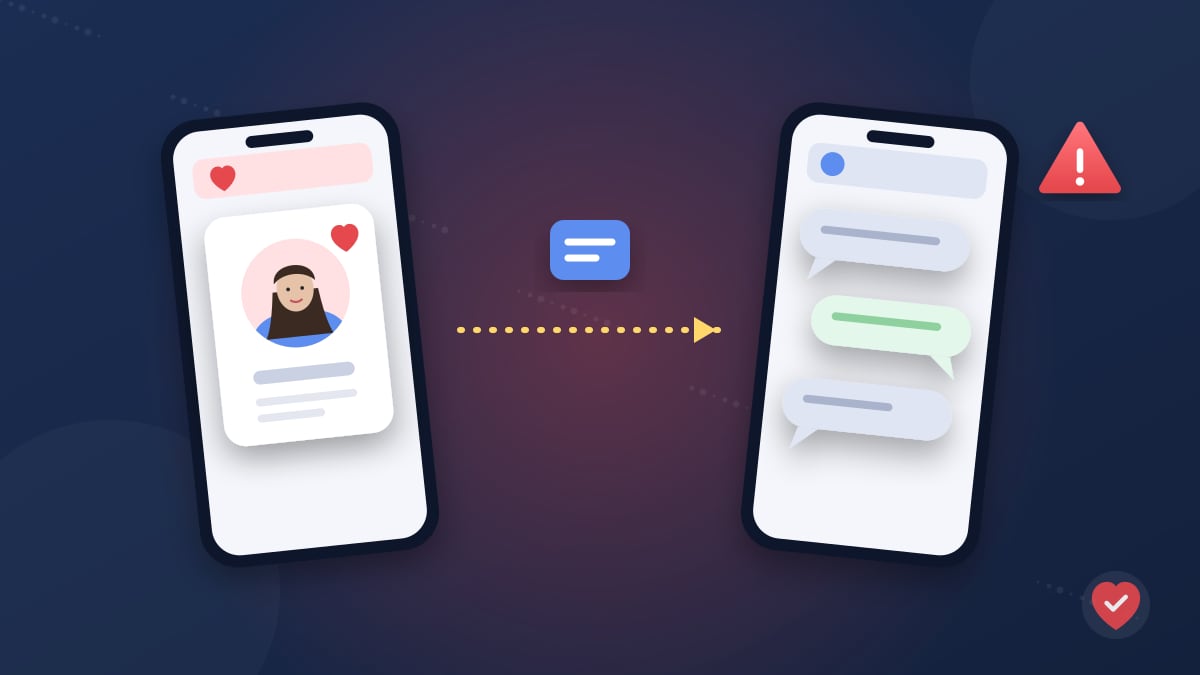
Moving the chat to a private messenger removes the platform's protection.
Why they say it. Once you leave the app, the platform can no longer flag the account or warn you, and your report will not stop the conversation. A private messenger also feels more intimate, which strengthens the bond. Many genuine people do eventually swap numbers, but they rarely push for it in the first few messages.
Red flag: pressure to switch apps before you have met, video called or learned anything verifiable about the person.
Stage 3: Building the fake life
Next comes the story. The scammer's invented life is carefully chosen: respectable, well paid, and conveniently far away.
- 9. "I'm an engineer on an offshore oil rig. My contract ends in three months."
- 10. "I'm a soldier on a peacekeeping deployment. Things are hard here, but talking to you keeps me going."
- 11. "I'm a doctor working with an aid mission abroad."
- 12. "I'm a widower raising my daughter alone. She says she can't wait to meet you."
Why they say it. Each of these jobs explains in advance everything that will happen later: why the person cannot meet, why calls are impossible, why their money is "stuck" and why an emergency could strike at any moment. A widower with a child adds sympathy and makes the person seem gentle and family-minded. The fake soldier is so common that we wrote a separate breakdown of the fake deployed soldier romance scam.
Red flag: a perfect profile with a job abroad, a sad back story and no way to confirm any of it. Photos are often stolen, so it is worth learning how to reverse image search a dating profile.
Stage 4: Excuses to avoid video calls and meeting
A scammer cannot show you their real face, because it does not match the photos. So the excuses start as soon as you suggest a call.
- 13. "My camera is broken. I'll fix it as soon as I'm back in town."
- 14. "The base doesn't allow video calls for security reasons."
- 15. "The connection on the rig is too bad for video, only text works."
- 16. "I'm shy on camera. Let's wait until we meet in person, it will be more special."
A person who is always "unable" to turn on the camera is a major warning sign.
Why they say it. A two-minute live video call would end the whole scheme, so it has to be avoided at all costs. Sometimes scammers agree to a call but the video is frozen, dark or lasts a few seconds, or they send a pre-recorded clip instead. The planned meeting is always just around the corner and always postponed.
Red flag: weeks of messages, but never a clear, live, two-way video call. In the age of smartphones, no job blocks video forever.
Stage 5: Secrecy and isolation
As the relationship deepens, the scammer starts to quietly separate you from the people most likely to spot the scam.
- 17. "Don't tell your family about us yet. They won't understand what we have."
- 18. "Your friends are just jealous. Only I really know you."
- 19. "Please keep this between us. If people find out about my situation, I could lose my job."
Why they say it. Relatives and friends are a scammer's biggest risk, because an outsider sees the pattern immediately. Making the relationship a secret also makes you feel special and protective. Later, if money is involved, the secret makes it harder to ask anyone for advice.
Red flag: any request to hide the relationship, or the money, from the people who care about you.
Stage 6: The emergency and the money ask
This is the point the whole script has been building towards. The emergency usually arrives weeks or even months in, once trust is solid.
- 20. "Customs is holding my package with my gold and documents. I just need to pay the release fee."
- 21. "My bank account is frozen while I'm abroad. I'll pay you back the moment I'm home."
- 22. "Help me with the plane ticket so I can finally come and meet you."
- 23. "I'm in the hospital and they won't treat me until the bill is paid."
- 24. "Send me gift cards or crypto, my bank transfers aren't working here."
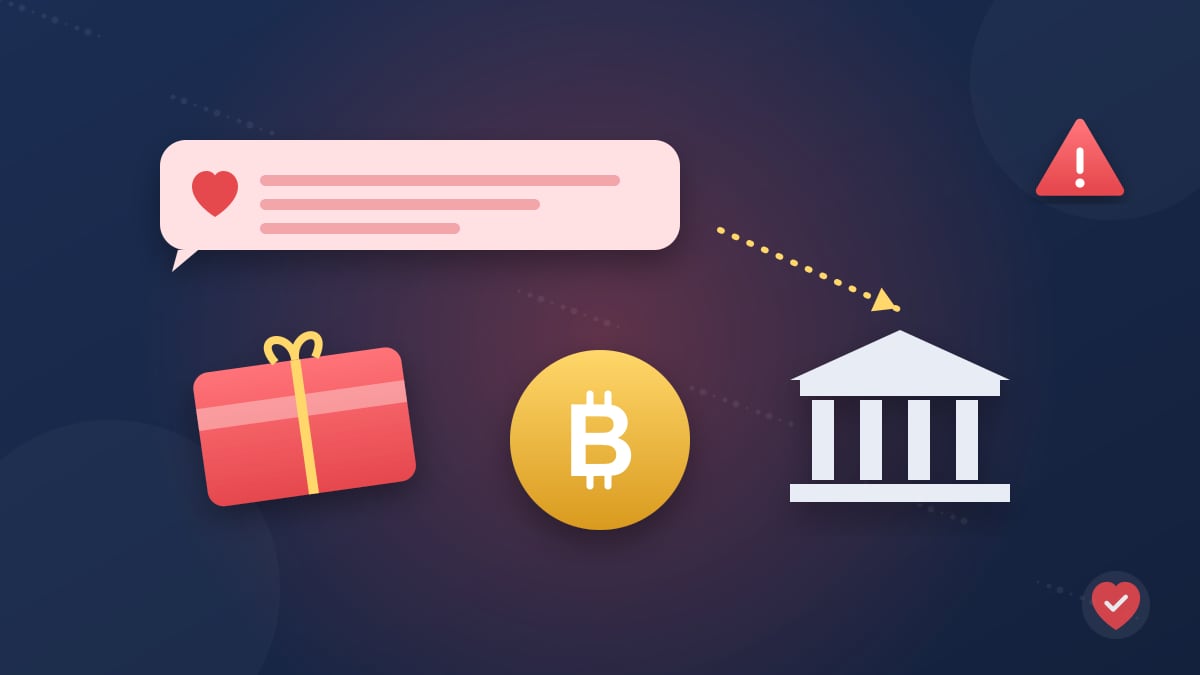
Gift cards, crypto and urgent transfers are the scammer's favourite payment methods.
Why they say it. By now, saying no feels like abandoning someone you love in a crisis. The amounts often start small and grow. Gift cards, cryptocurrency and transfers to "a friend's account" are chosen because they are fast and almost impossible to reverse. Ticket money is especially cruel: it promises the very meeting that will never happen.
Red flag: any request for money, in any form, from someone you have never met in person. This is the one rule with no exceptions.
Stage 7: The investment pitch
Some scammers never ask for help at all. Instead, they offer to make you rich. This version, often called "pig butchering", now accounts for some of the largest losses.
- 25. "My uncle is a financial analyst. He showed me a trading platform that never loses."
- 26. "Start with a small deposit, I'll guide you step by step."
- 27. "Your profit is ready, but you need to pay the tax before you can withdraw."
Why they say it. An investment does not feel like giving money away; it feels like building a future together. The fake platform shows impressive gains, so you deposit more. When you try to withdraw, new "fees", "taxes" or "verification deposits" appear. The approach can even start with a message sent to the "wrong number", as described in our alert on the wrong-number text and gold trading romance scam.
Red flag: an online love interest who talks about crypto, gold or trading apps and offers to "teach" you.
Stage 8: Pressure and guilt when you hesitate
When you question the story or refuse to pay, the tone changes. Affection turns into hurt, anger or despair.
- 28. "If you really loved me, you would help me."
- 29. "I thought you were different. I trusted you with my heart."
- 30. "I have no one else. If you don't help, I don't know what I'll do."
Why they say it. Guilt is a powerful lever, especially for kind and loyal people. The scammer wants you to feel responsible for their suffering, so that paying feels like the only way to make the bad feeling stop. Threats of self-harm or sudden silence are pressure tactics, not proof of love.
Red flag: love that becomes conditional on money. A partner who truly cares will respect a "no".
For a broader look beyond the exact wording, see our guide to the 10 red flags of a romance scammer.
How to reply safely
You do not need to argue, accuse or prove anything. Calm, simple replies are the safest, and a scammer's reaction to them often tells you everything.
Simple, calm replies protect you and quickly reveal a fake.
- Ask for a live video call. "I'd love to keep talking, but I only continue with people I've seen on a live video call. How about today at 7?"
- Ask a specific, checkable question. "Can you send a photo holding a piece of paper with my name and today's date?" A real person can do this in a minute.
- State your money rule early. "Just so you know, I never send money, gift cards or crypto to anyone I haven't met in person. No exceptions."
- Keep your personal data private. Do not share your home address, ID, bank details or verification codes, even if asked "for the ticket" or "for customs".
- Screenshot everything. Save the profile, the chats, phone numbers and payment details. They help the platform, your bank and the police.
- Check before you trust. Run their photo, phone number and email through our free check. It reverse-searches photos and flags virtual numbers and disposable emails.
If the answer to these replies is anger, a new excuse or sudden silence, you have your answer.
Quick check: what common romance scammer phrases mean
| Phrase type | What it means | Your move |
|---|---|---|
| "You're my soulmate" after days | Love bombing to build trust fast | Slow down and ask for a video call |
| "Let's move to WhatsApp" | Escaping the app's scam filters | Stay on the app until you've verified them |
| "I work on a rig / base abroad" | A cover story for never meeting | Ask for a live video call this week |
| "My camera is broken" | They can't show their real face | Treat it as a serious warning sign |
| "Don't tell your family" | Isolation from people who'd spot it | Tell someone you trust right away |
| "Customs / hospital / ticket / tax" | The money request has arrived | Say no, stop paying, report the profile |
What to do if you already sent money
If you recognise these scammer messages too late, you are not alone and it is not your fault. Acting quickly can make a real difference.
- Call your bank immediately. Use the number on the back of your card. Ask them to stop or recall the transfer and block further payments. With gift cards, contact the card company straight away with the codes.
- Stop all payments. Do not send "one last fee" to unlock a refund, a package or a withdrawal. It never ends.
- Report the profile to the dating platform and to the messenger you moved to.
- Report to the authorities. In the US, file with the FBI's Internet Crime Complaint Center (ic3.gov) and the FTC (ReportFraud.ftc.gov). In the UK, contact Action Fraud.
- Tell your story on our site. You can report the scammer here so others can recognise the same photos and script.
- Beware of "recovery" services. People who promise to get your money back for a fee are very often the same scammers, or new ones who bought your details.
Talk to someone you trust. Shame is exactly what keeps victims silent, and silence helps scammers.
FAQ
What do romance scammers say first?
Usually warm compliments and quick affection: "You have a beautiful smile", "I feel a connection with you", "God led me to your profile". Within days, many suggest moving to WhatsApp, Telegram or Google Chat. The first message itself can look completely normal; it is the speed and the pattern that give them away.
Can a scammer really fall in love with a victim?
The feelings in the messages are part of the script, often written by several people working shifts on the same account. Whatever is said, the goal stays the same: money. Genuine love does not require you to pay to keep it.
Is it a scam if they never ask for money directly?
It can be. Many modern schemes offer an investment opportunity instead of asking for help, or ask for gift cards "for a friend". Any conversation that leads to you sending money, crypto or personal data to someone you have not met should be treated as a scam until proven otherwise.
How can I check if the person I'm talking to is real?
Ask for a live video call, ask for a specific photo, and reverse-search their pictures. You can run their photo, phone number and email through our free check in a few minutes, without the other person ever knowing.
Not sure about someone? Check their profile in seconds.
Check a profile