How a Wrong-Number Text Became a $270,000 Romance Scam
An 82-year-old lost $270,000 to a 'wrong number' text that became romance, then fake gold trading. See each stage of the scam and how to spot it early.
The Romance Check · November 16, 2026 · 6 min read
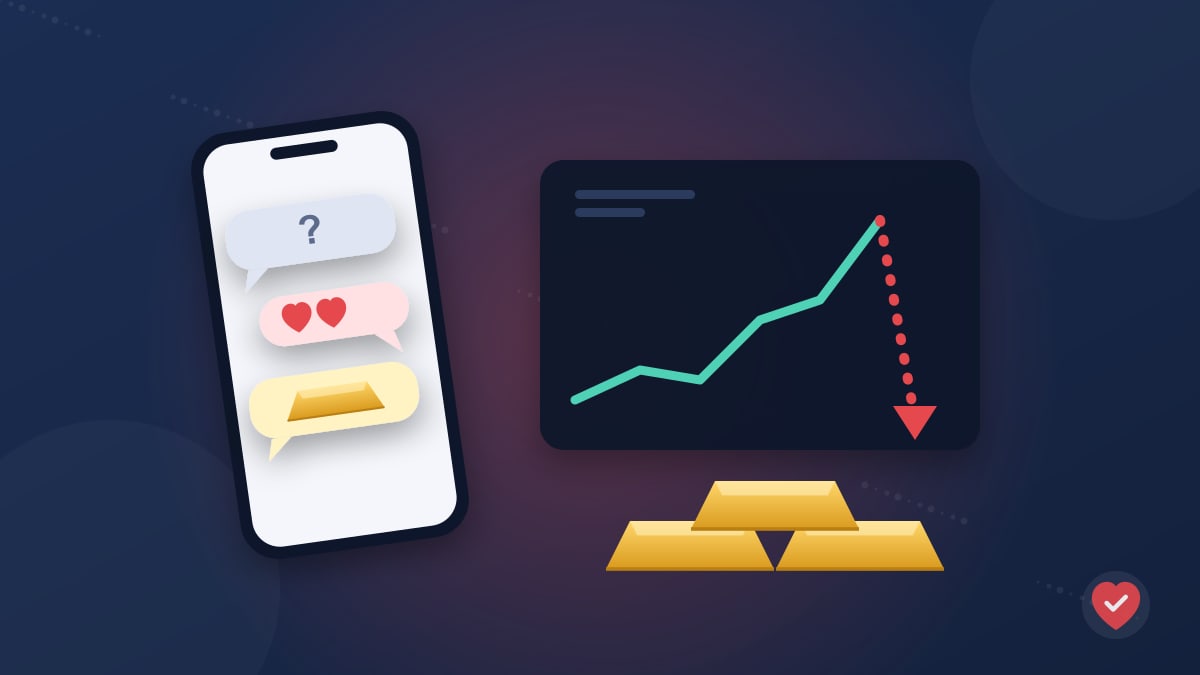
In a case reported in April 2026, an 82-year-old retired sports journalist in the United States lost about $270,000 in roughly ten weeks. It began with a single text from a stranger who said she had the wrong number. It ended with his savings gone and nothing recovered.
Schemes like this are often called "pig butchering". The term comes from the fraudsters' own slang: the target is "fattened up" with attention and fake profits before being financially "slaughtered".
How the scheme works, step by step
The case followed six stages. For each: what happens, why it works and the red flag to catch.
Stage 1: The "wrong number" text
What happens. A message arrives from an unknown number, inviting him to a cookout. Instead of ending the chat, the sender keeps it going with friendly questions, including how old he is.
Why it works. Polite people answer polite messages. Because the contact looks accidental, it doesn't feel like someone is targeting you, so your guard stays down. Casual questions also reveal whether you are retired and might have savings.
Red flag. A stranger who texted "by mistake" but keeps the conversation going and starts asking personal questions.
Stage 2: Friendship and daily life
What happens. The chat turns flirtatious. She says she runs a jewelry business in Los Angeles. They swap updates about their days and even "cook meals together" over text. Lonely and enjoying the attention, he tells her he is ten years younger than he is.
Why it works. Daily check-ins create real feelings, even when one side is a script. Loneliness is a human need, not a weakness, and these schemes are built to meet it.
Red flag. A relationship that grows intense and flattering very fast, lives entirely in messages. It's worth asking yourself: have I ever seen this person live on video?
Stage 3: The gold "opportunity"
What happens. After weeks of closeness, the conversation turns to short-term gold trading on a particular platform. To look credible, the scammers imitate the social-media community of a real, legitimate crypto platform.
Why it works. The idea doesn't come from a salesperson; it comes from someone you trust. A famous brand's look adds credibility.
Red flag. Anyone you know only online who introduces an investment, a trading app or a website.
Stage 4: Fake profits
What happens. He invests $20,000 and soon sees an apparent profit of $1,920. Encouraged, he adds $70,000, then the rest of his $133,000 portfolio. By early October the account shows $1.3 million. None of it is real.
Why it works. A small early win "proves" the system works. A balance on screen feels like money in the bank, and each deposit makes doubt harder to admit.
Red flag. Returns that look far too good, on a platform where you have never actually moved money back to your own bank.
Stage 5: The withdrawal "tax"
What happens. When he tries to withdraw, he is told he must first pay $216,000 in "taxes". To reach what he believes is his fortune, he empties his savings and takes a $20,000 loan.
Why it works. With $1.3 million apparently at stake, one more payment feels like rescuing the money, not losing more.
Why real platforms never do this. Tax on investment gains is settled with your tax authority. It is not paid to a trading platform as a condition for releasing your funds. A legitimate firm deducts any fees from your balance; it never demands fresh money first.
Red flag. Any fee, tax, "unlock" charge or deposit required to withdraw. This is the clearest sign of all.
Stage 6: The aftermath
A relative confirmed the platform was fraudulent and that the money had gone overseas. He recovered nothing; he now lives on Social Security and a pension and has sold belongings.
A former cybercriminal who now works in security made the point in coverage of the case: fraud begins with trust, and the money comes later.
Red flags at a glance
| Stage | Warning sign |
|---|---|
| First contact | "Wrong number" text that turns into a long chat |
| Relationship | Constant flattery and check-ins, only by message |
| Opportunity | An online partner suggests trading or a platform |
| Profits | Early gains that look too good to be true |
| Withdrawal | Any tax or fee to get your own money out |
| Outside view | Family or advisors feel uneasy |
For the broader list, see our 10 red flags of a romance scammer.
What to do if you are in it right now
- Stop sending money, including any "tax", fee or deposit, no matter how close the payout seems.
- Check the platform independently. Search your country's financial regulator register and type addresses yourself. A site that looks like a famous brand is not that brand.
- Run the profile through our free check. It can reverse-search photos and flag virtual phone numbers and disposable emails.
- Tell someone you trust. Family and advisors often spot the scheme first.
- Never send money to someone you only know online.
If you already lost money
- Call your bank immediately.
- Report it. In the US, file with the FBI Internet Crime Complaint Center (ic3.gov) and the FTC (ReportFraud.ftc.gov); in the UK, contact Action Fraud.
- Keep everything: messages, numbers, website addresses, receipts.
- Report the profile to the platform where you met, and tell your story to help warn others.
- Beware of "recovery" services. Anyone promising to get your money back for an upfront fee is often running a second scam.
Being targeted says nothing about your intelligence: these scripts are built to fool careful, educated people.
FAQ
What is a pig butchering scam?
It is a long-game fraud that combines a friendship or romance with a fake investment. The scammer builds trust over weeks, shows invented profits on a fake platform, then demands more money before any withdrawal.
Is a "wrong number" text always a scam?
No, genuine mistakes happen. But if the sender keeps chatting, asks personal questions and slowly steers toward money or investing, treat it as a likely scam and stop replying.
Do I have to pay tax before withdrawing from a trading platform?
No. Taxes are settled with your tax authority, not paid to a platform to release your funds. A demand for upfront "tax" or fees to withdraw is a hallmark of investment fraud.
Source: Moneywise
Not sure about someone? Check their profile in seconds.
Check a profile